
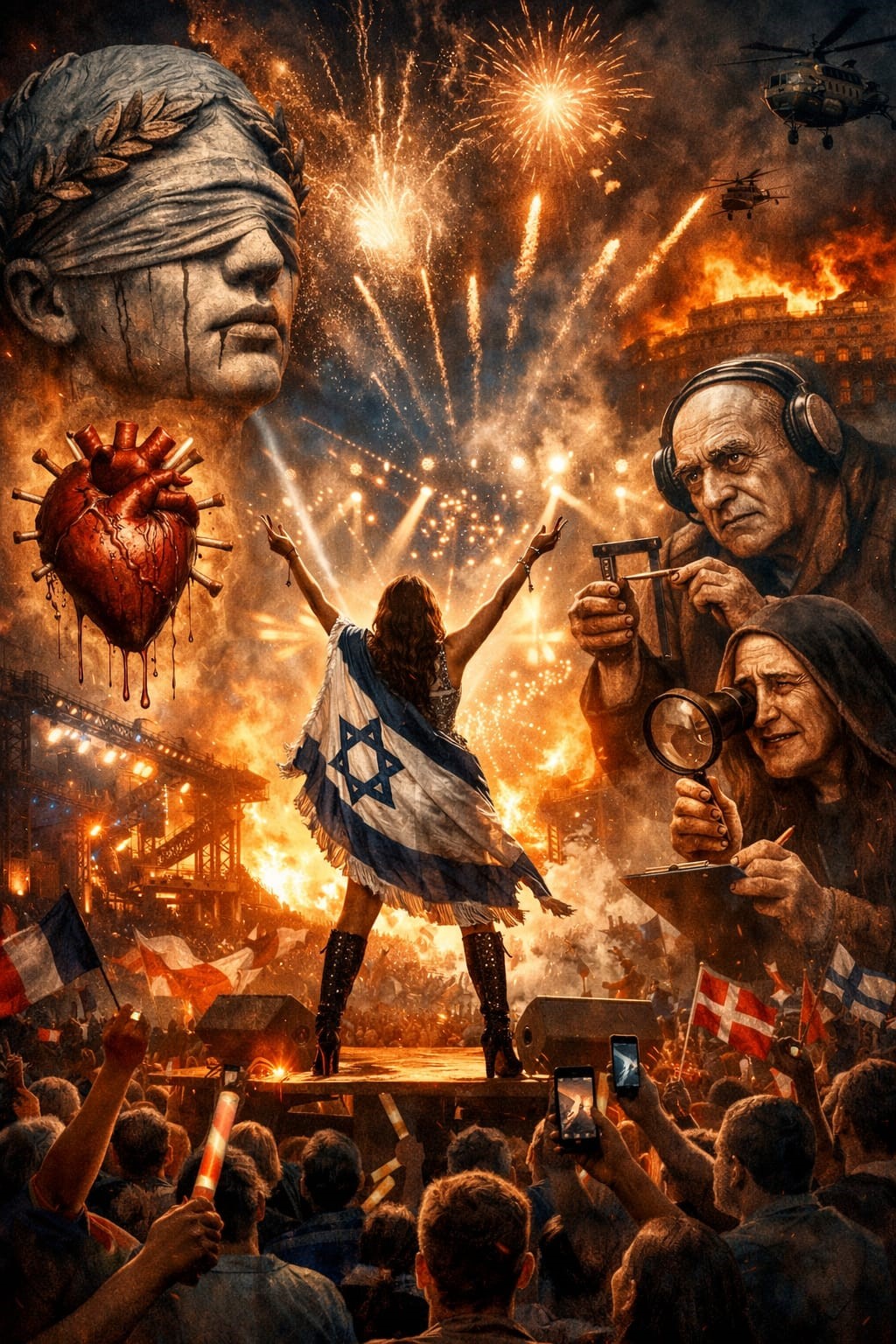

Spectacle, Nation, and the Price of Participation
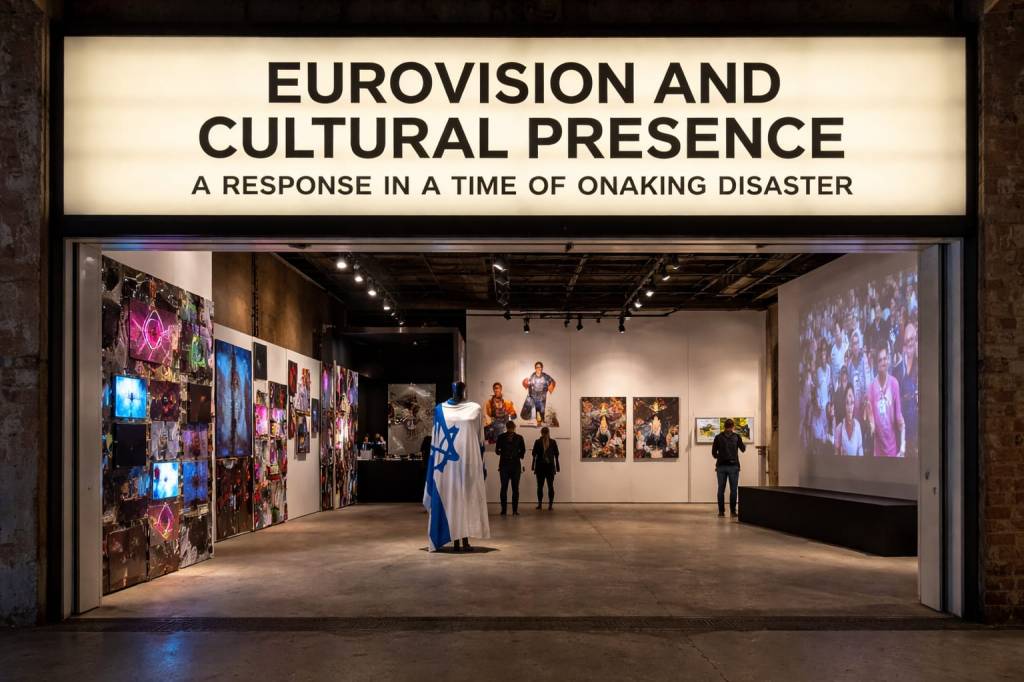
The works presented here operate within a field where spectacle, nationalism, sacrifice, and identity are no longer separable. Eurovision at a Time of Disaster does not address a music competition, but a mechanism: how culture, emotion, and collectivity organize themselves into spectacle—and how spectacle persists even as it collapses
“Ancient National Symphony” by an anonymous artist positions an imagined collective as a single resonant body. It is a symphony without an identifiable composer, without a singular origin, in which nationalism functions as an emotional and ritual force. The work is not nostalgic; it examines how national myth becomes a recurring mechanism of convergence, excitation, and compliance
“Made in Israel” by Oved Sarraf is a photograph that presents a polished image of visibility, body, and symbol—the image Israel produces and exports outward. The photograph is self-aware, suspended between authenticity and staging, between lived identity and national branding. Aesthetic seduction operates here alongside the exposure of its own conditions of production
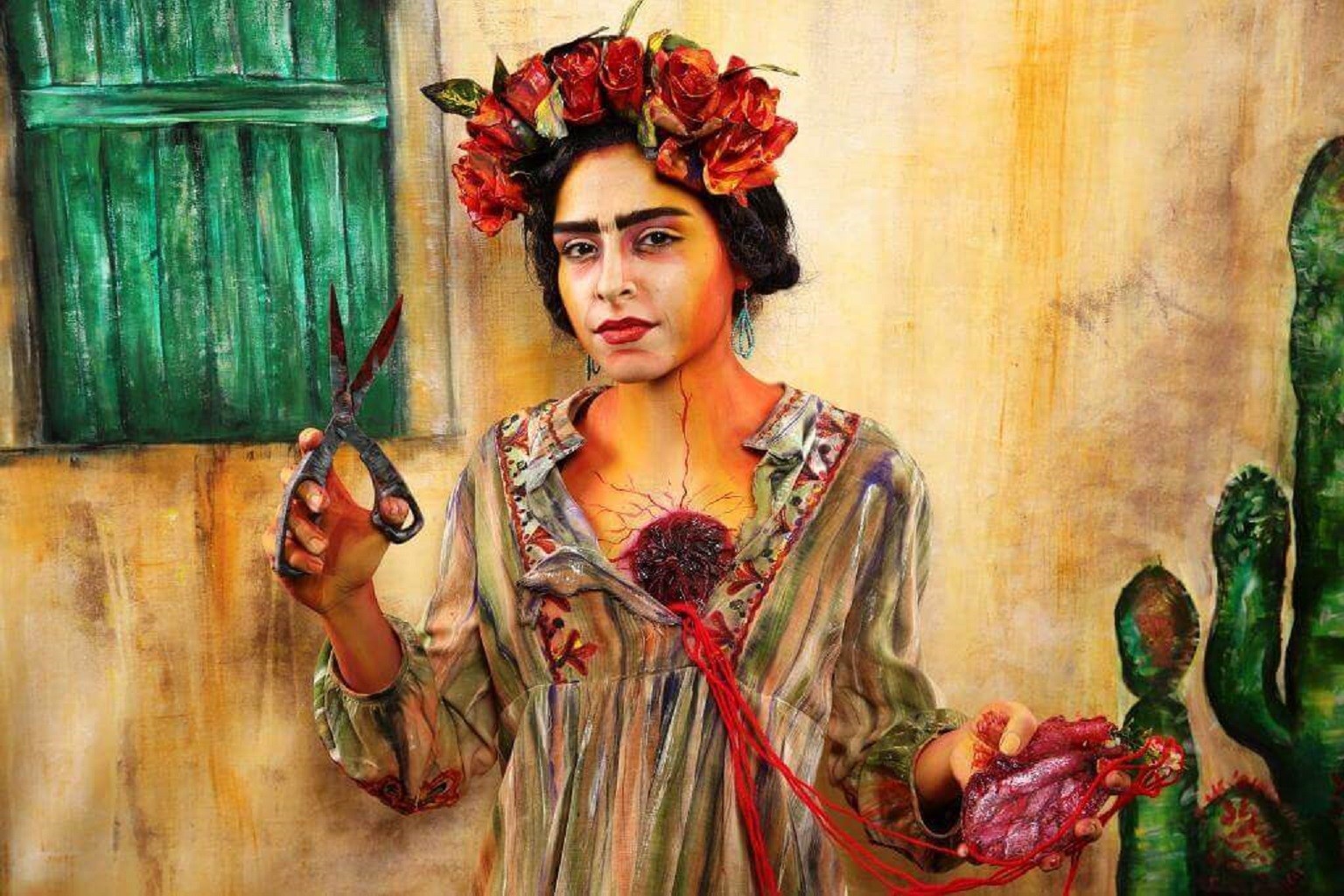
“Frida’s Heart” by Rotem Reuven Arjuan presents Frida Kahlo as a conscious imitator, yet one who chooses a path opposite to that of the protagonist in Angel Heart. While Angel sells his soul to the devil in order to obtain music and participation, Frida offers her heart willingly—as a sacrifice in service of music itself. This is an image of giving rather than transaction, of desire that does not seek authorisation from an external power
“The Measurers” by Hanna Ashury is a new canvas-based work derived from two grotesque figures extracted from her 2018 solo exhibition Tziurkav, one of which is a self-portrait. These figures are the ones who measure, judge, and critique—each operating from within their own flaw. Beyond the painterly enactment of the adage “one judges others through one’s own defect,” the work exposes the quiet violence embedded in cultural critique
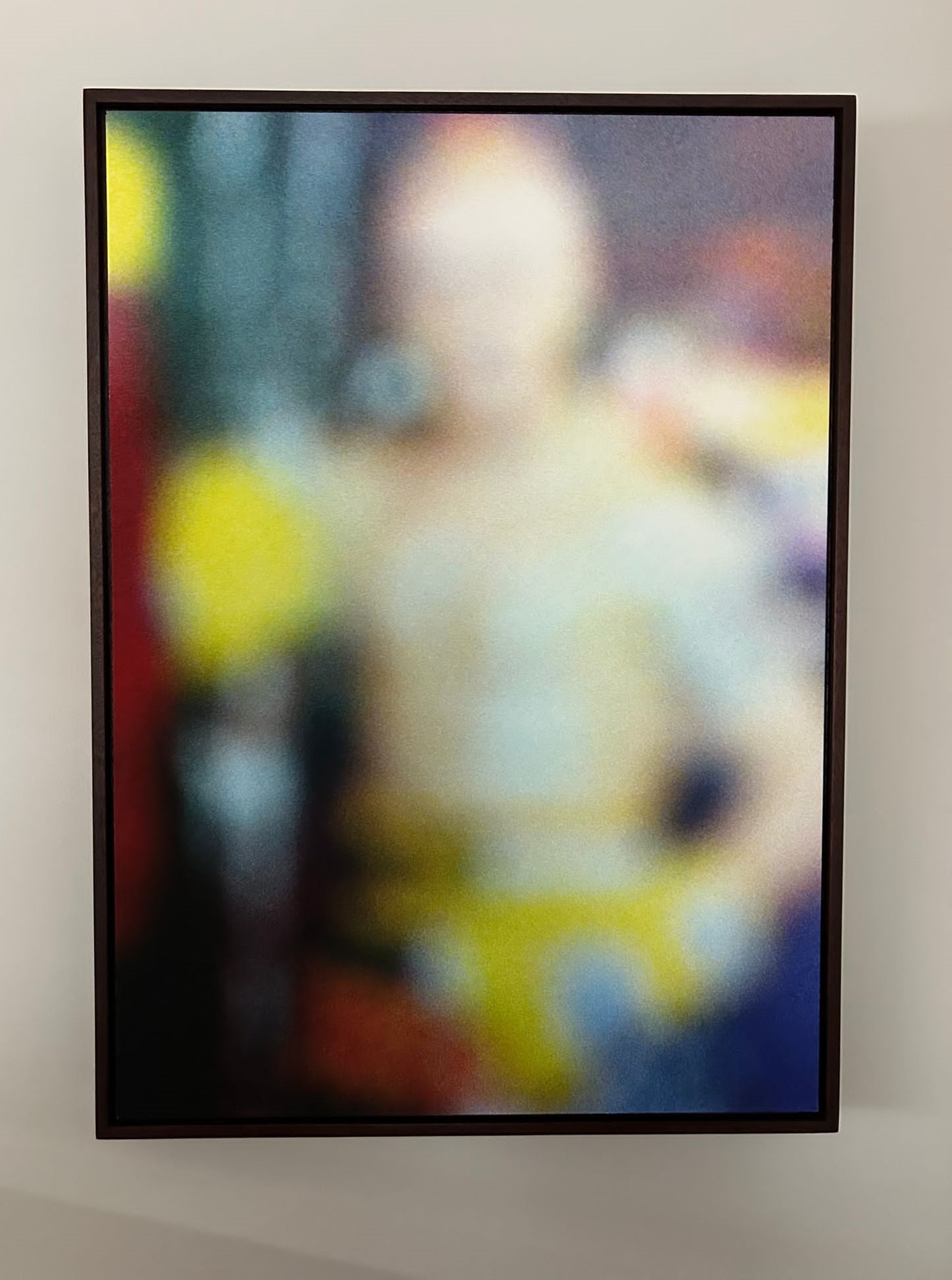
The Boxer is part of an ongoing photographic series in which Guy Hugler lingers over found printed materials, manipulating them through extreme close-up as a transformative process that dismantles their immediate recognizability. The Boxer presents a reflective engagement with performance and spectacle, where the act has already occurred, yet the image insists on remaining suspended— a moment after the blow, or just before the next
From a curatorial perspective, the choice of the boxer with yellow gloves, within the context of the hostages and the call to boycott Israel, produces a charged parallel between a body in the ring and a national body subjected to a form of media-driven field trial. The oscillation between ideal focus and deceptive blur is not merely a formal gesture, but a struggle in itself: an attempt to strike back against the persistent ambiguity surrounding information, narratives, and facts concerning Israel. The gaze seeks clarity — yet remains caught between seeing and the inability to see
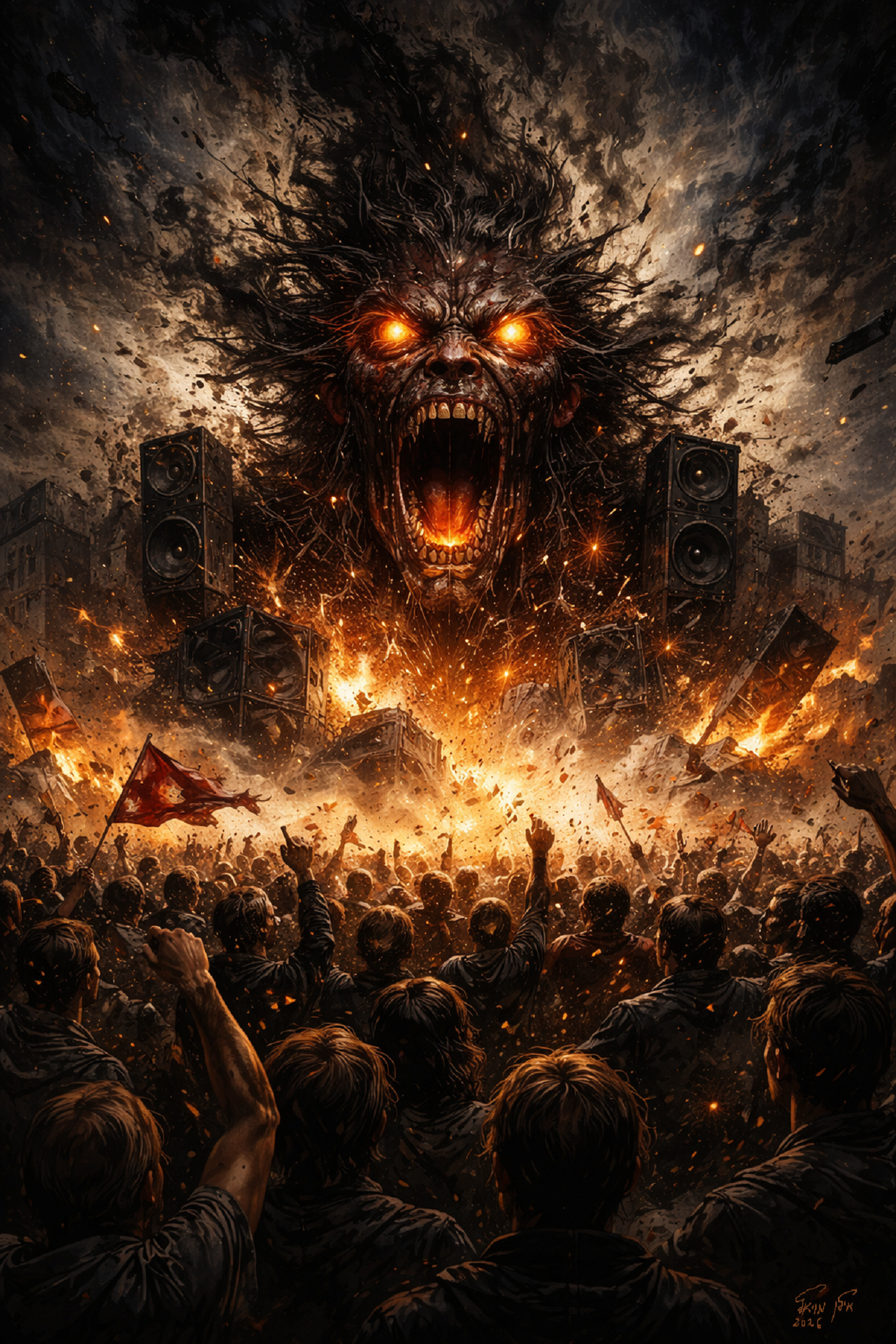
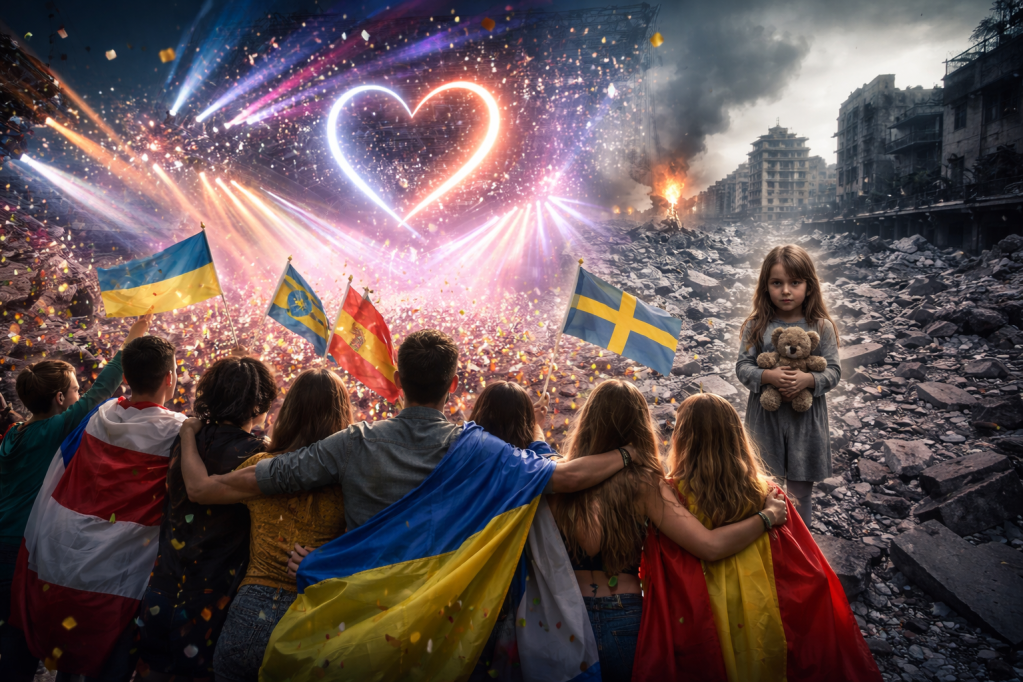
“Eurovision at a Time of Disaster” by Ilan Moyal stages a spectacle in which crowd, desire, sound, and destruction converge into a single image. This is a moment in which entertainment does not compensate for catastrophe, but exists within it. The work proposes a view of culture as a site where catastrophe does not negate spectacle, but feeds it.
The space presented here remains unresolved. An additional work is still in the process of becoming, and the situation remains open


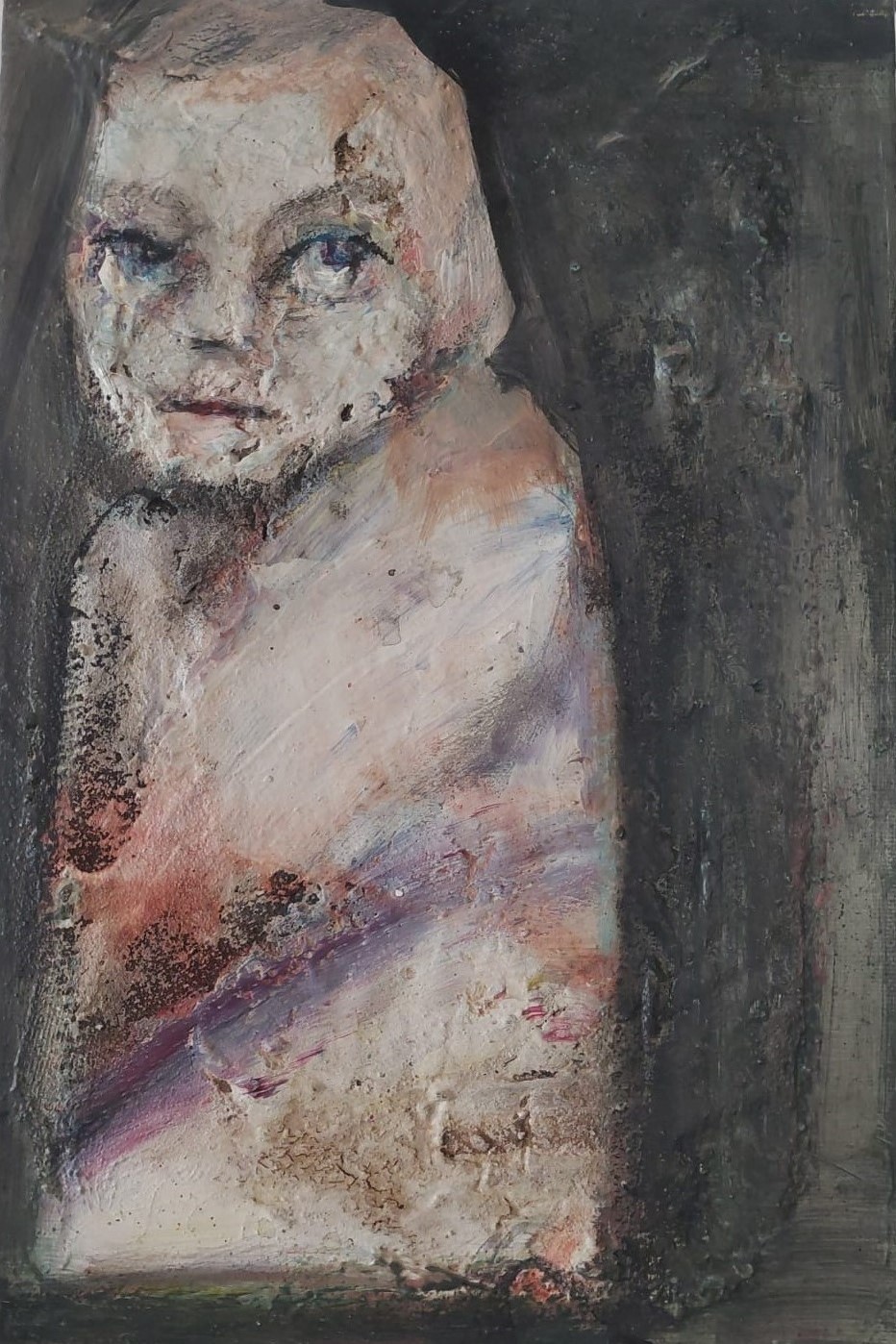
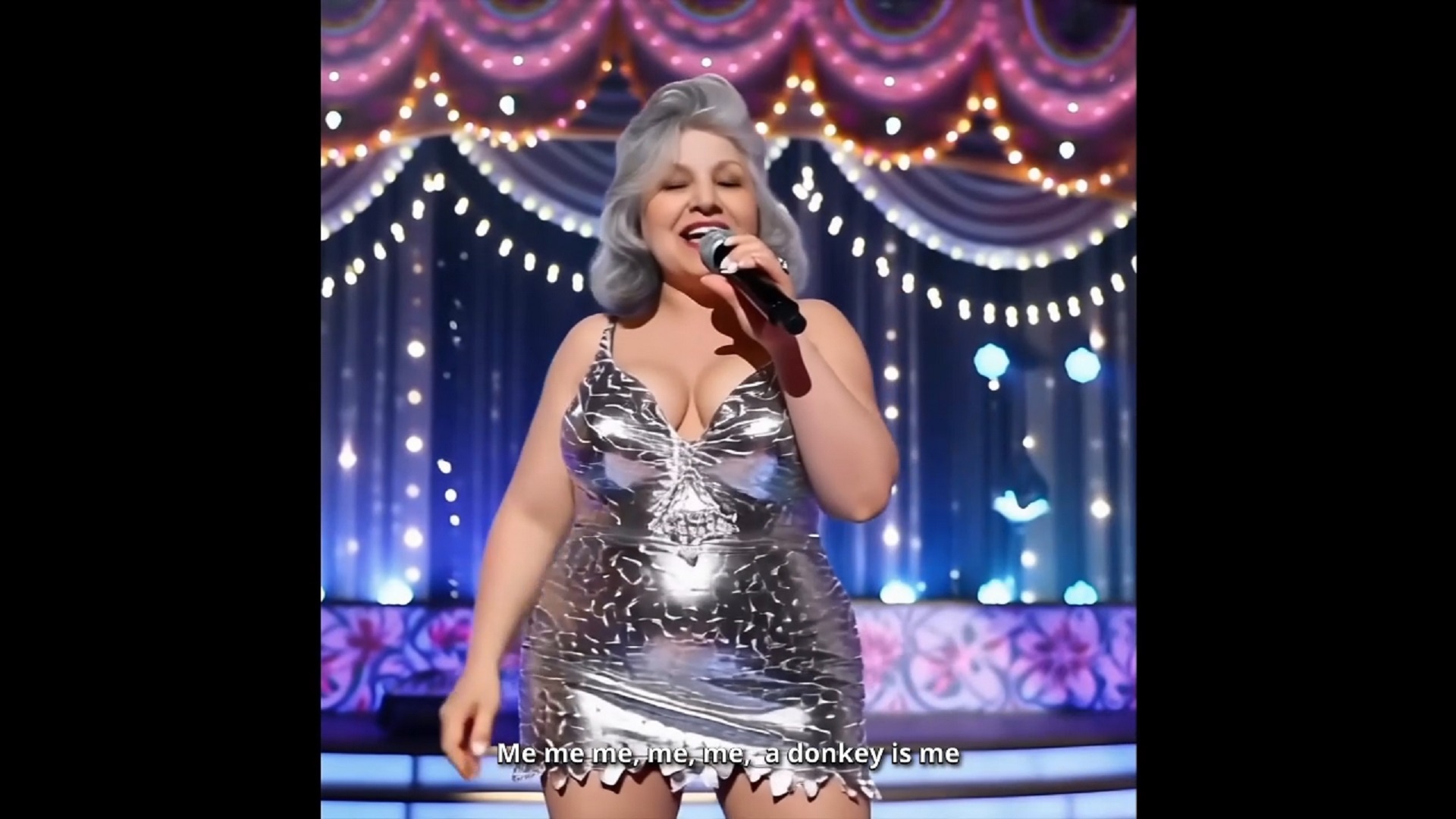
Samdar Lomnitz joins the exhibition from a personal, exposed, and unequivocal position. Lomnitz holds a clear belief that Israel should participate in the Eurovision, viewing participation itself—despite its complexities—as an act of agency rather than withdrawal. The site presents her 2017 painting, “Homage to My Older Self,” which depicts an ongoing struggle with the desire to sing alongside fears that have blocked her voice since childhood. In contrast, and for the first time in this context, Lomnitz presents a contemporary video work (48 seconds), created especially for the exhibition: a short humorous song she wrote, composed, and performed—“I am a donkey, I am a donkey, come on everyone, who’s joining me to bray?”. Moving between vulnerability and humour, confession and conscious performance, her presence in the exhibition articulates a commitment to participation even when it entails embarrassment, risk, and discomfort—an insistence on remaining within the discourse rather than stepping away from it
Miriam Shterman
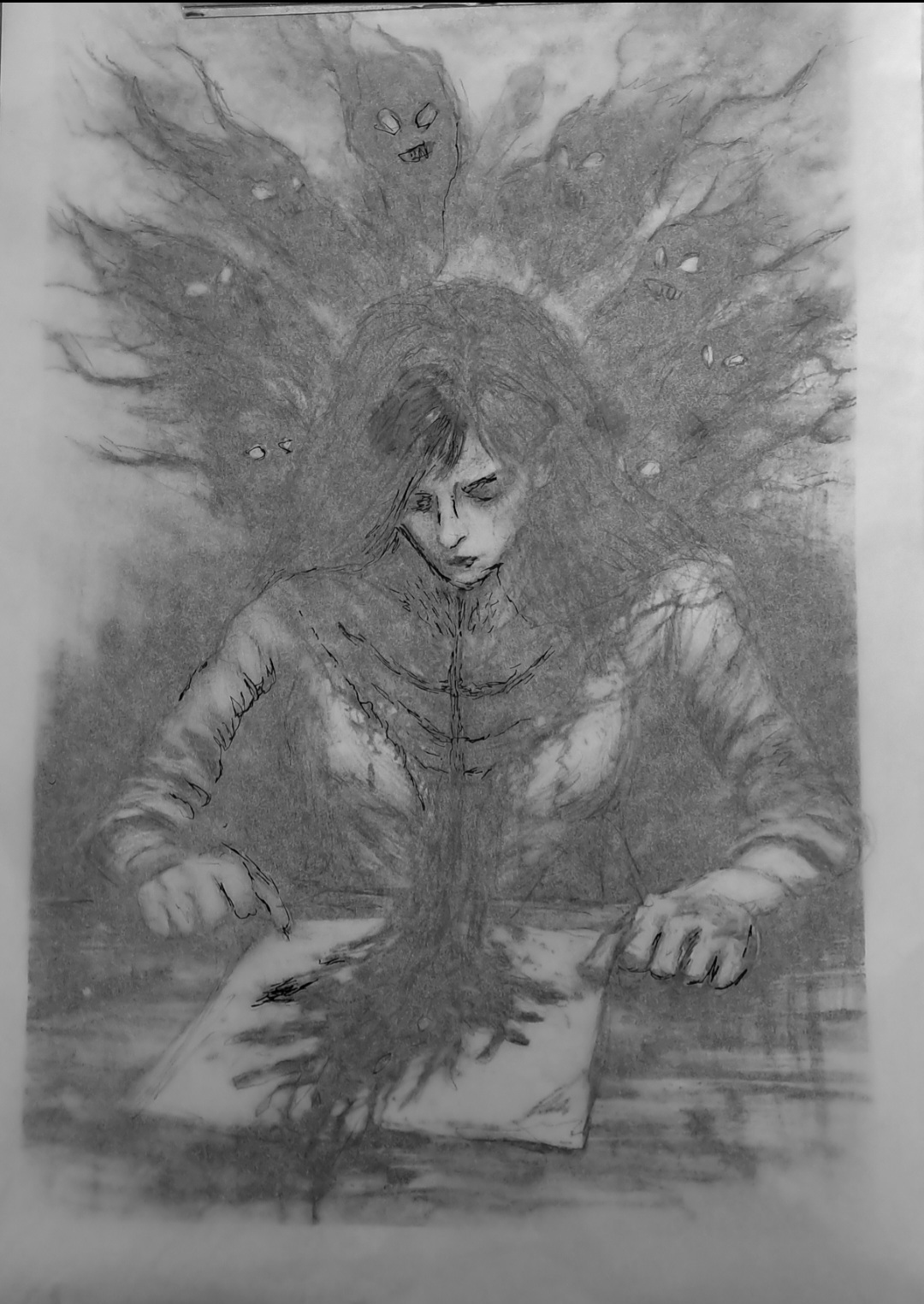
The Spectators
Pencil on paper, A4, 2026
.Created especially for the exhibition Eurovision in a Time of Disaster
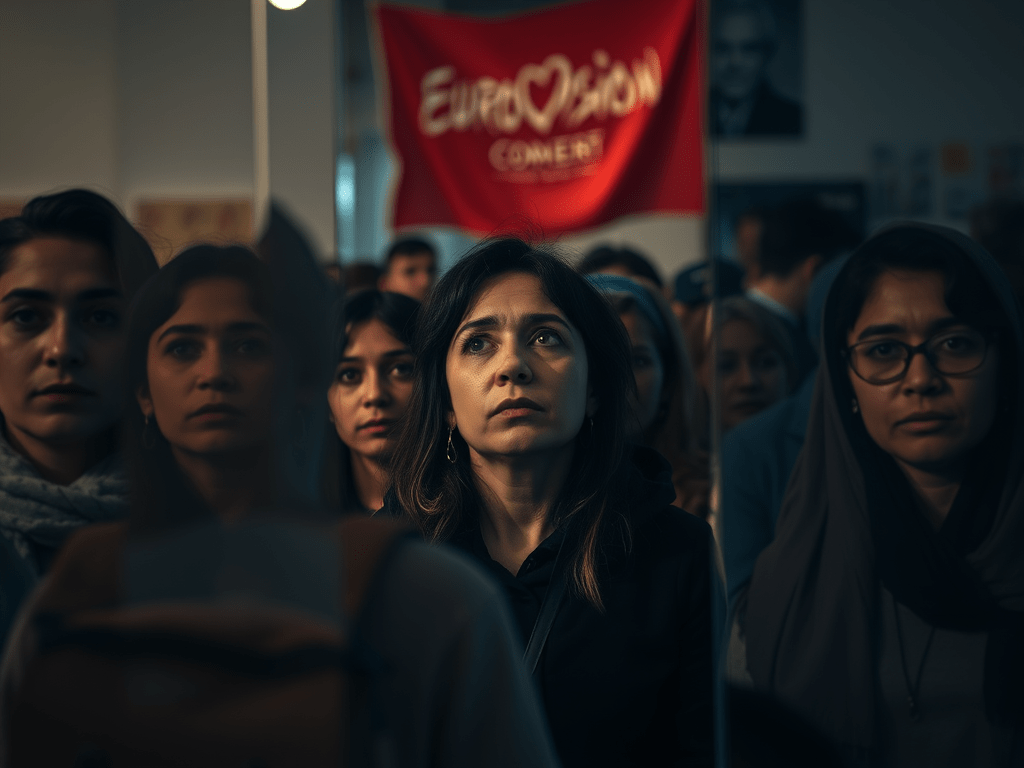
The drawing depicts a figure bleeding from within—sharing something essential and intimate—while behind her unfolds a world of falsification, betrayal, and cynicism. The voices and faces in the background form a system that watches, consumes, and ultimately looks away
As the artist notes, the work addresses the price of participation within a cultural mechanism such as Eurovision: the tension between exposure and exploitation, expression and spectacle. The central figure embodies the gap between the vulnerable potential of representing a nation through music and the cynical use of boycott as a political tool, enacted before an audience that is both complicit and indifferent
The Spectators confronts the erosion of music’s ethical core, asking what is sacrificed when art is absorbed into mechanisms of power, visibility, and collective denial
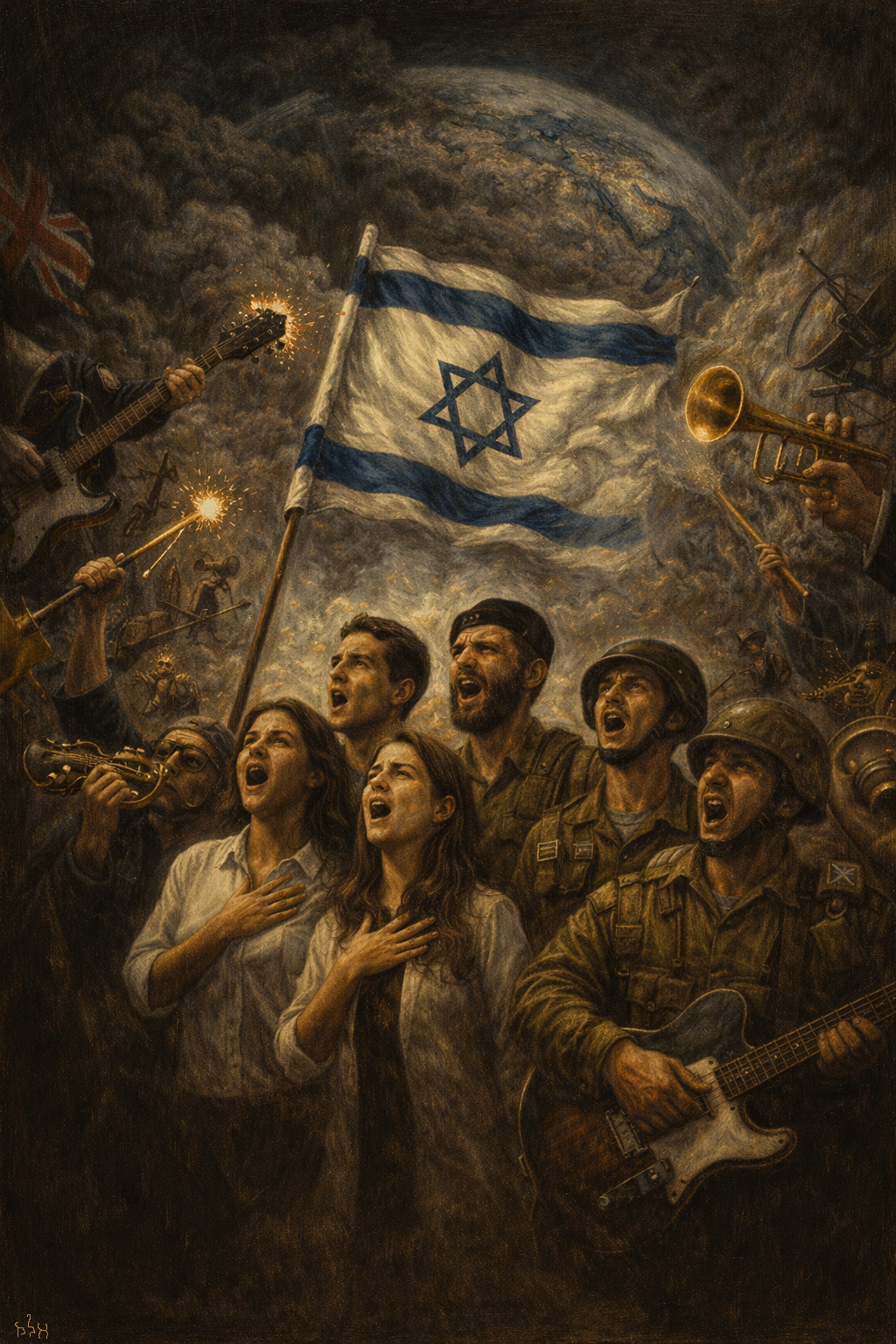
Good News: A New Artist Joins the Exhibition “EEurovision at a Time of Disaster” Song of Creation
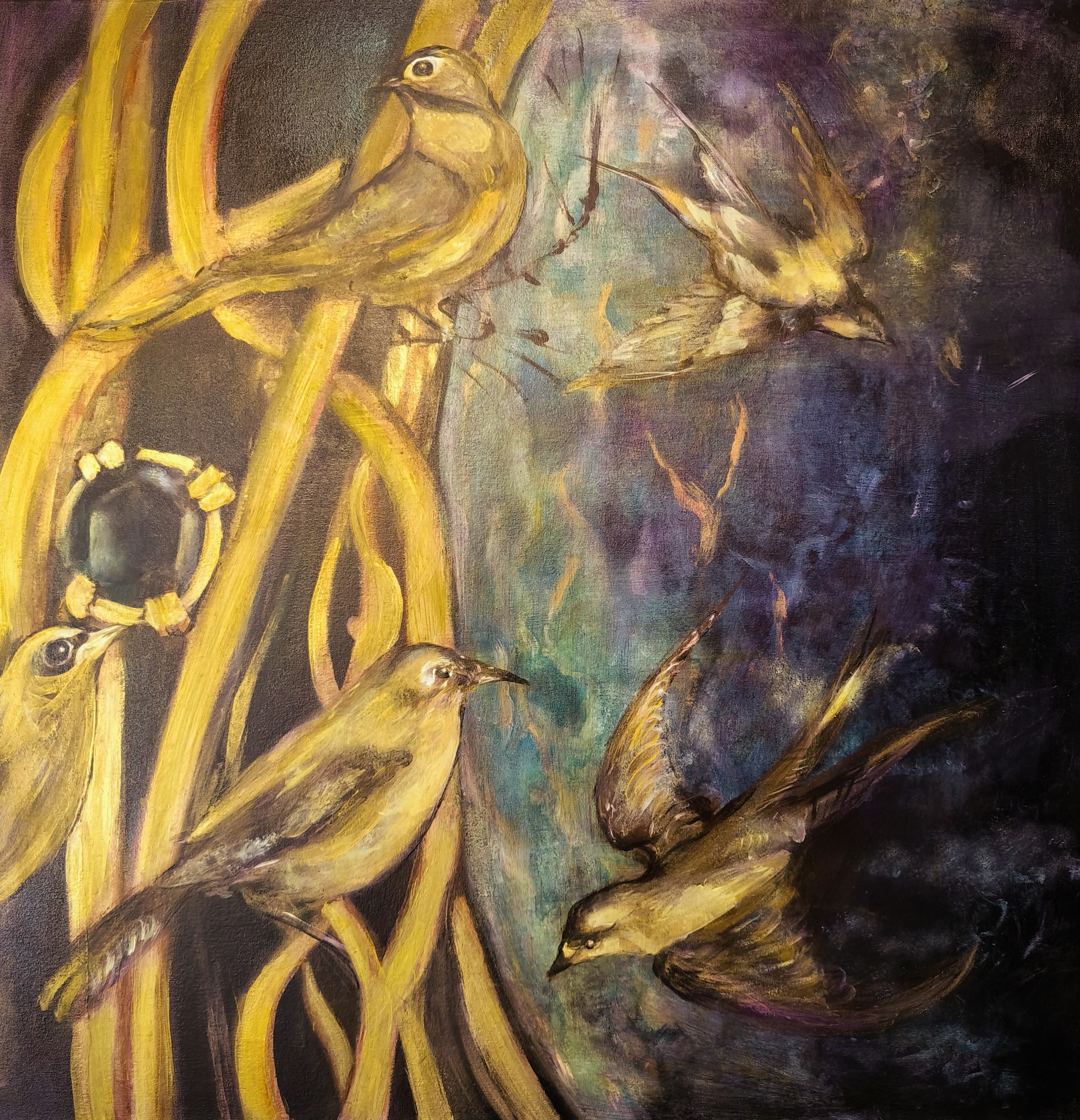
Oil on canvas, 100 × 100 cm, 2025
.The Earth is cloaked in gold
.set with deep sapphire like the vastness of the sky
.Within waves of light and grace
– five songbirds circle
.carrying on their wings an ancient prayer
.This is a dance between heaven and earth
.a meeting point of eternity and time
.The songbird intones a hidden praise
,while sapphire echoes the act of creation itself
.In endless orbits they move
drawing a melody of hope through space – a whisper absorbed by stone and gold
.the primordial tune of creation, never ceasing
Parvin Shmueli Buchnik is an oil painter working in a classical technique of layered glazing. Her practice constructs poetic spaces between nature and consciousness, between the earthly and the celestial, and is driven by a longing for sublime beauty as a manifestation of spiritual presence. Through images of birds, landscapes, and symbolic figures, she translates experiences of prayer, memory, and healing into a painterly language of light, depth, and motion
In Song of Creation, gold and sapphire merge into a cosmic field in which songbirds in motion transform into prayer—a visual hymn to creation itself
The painting stands in deliberate dialogue with Mockingbird–Crow, insisting :on the purity of song and defending it against distortion
“Politics must not turn music into accusation, hatred, or boycott.”
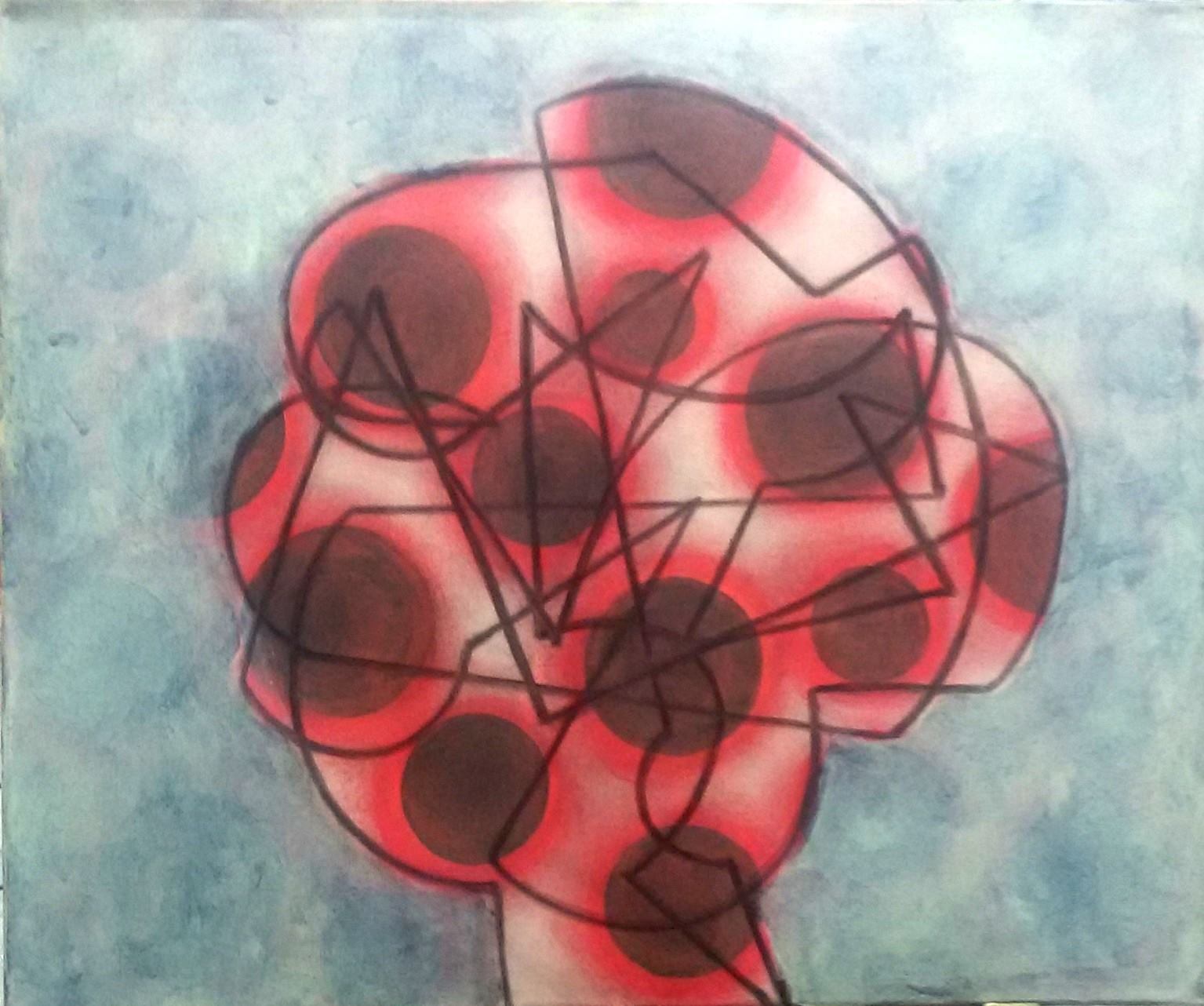
Mira Cadar presents a portrait from her abstract portrait series (2015), which explores distraction and the act of focusing on sensation. The exhibited work depicts a multiplicity of voices forming a false consciousness — a field of overlapping, conflicting, and often dissonant signals that seek to present themselves as a single coherent voice
Through repetitive color fields, fractured forms, and intrusive linear contours, the painting embodies a mental state of overload: a gaze unable to converge, an identity constructed from noise. Within the context of “Eurovision in Disaster,” the portrait reads as an allegory for a cultural mechanism operating under competing narratives, boycotts, and moral declarations — a space in which sensation precedes understanding, and .emotion replaces critical reflection
Oil on canvas

 TRANSISM